Bisexuality and Other Invisible Identities 

Bisexuality and Other Invisible Identities 


Being attracted to more than one gender bisexuality (and pansexuality) can be complicated and wonderful! 

In my work and over 8 years of experience as a therapist, I have learned an extraordinary amount about these identities that allow individuals and their partner(s) to manage their needs. 

Some people ask “how do I overcome bisexuality,” and we want them to know what the bisexuality definition is AND how they can learn to celebrate who they are!


Sexual Identity

Bisexuality Definition – attraction to “both genders or sexes,” while the Pansexuality Definition is being attracted to all genders.

In working with individuals who identify with the bisexuality definition, it is clear that there are many ups and downs in the identity.

When people within these identities are in a monogamous relationship, some have shared that it feels like their identity is not known – like a part of them is missing or hidden.

Sexual identity and bisexuality definition is confusing because it is fluid, which is not easy to describe to those who are “black and white” thinkers.


Relational Identity

Another invisible identity is being in a monogamous relationship when you identify as polyamorous or on the continuum of non-monogamous. 

There are many people who identify as polyamorous that choose to be in a monogamous relationship with their partner due to a variety of reasons. 

Whether that be that they are polyphobic (scared of being polyamorous), their partner is not okay with the idea of it, because there is no protection for employment for open relationships (you can get fired or Child Custody Services called on you if you identify with being in open relationships), or for other personal reasons. 

Polyamory is the idea of loving multiple partners. Polyamory, also known as consensual non-monogamy (CNM) is increasingly becoming common. 

Being in love with more than one person isn’t as radical as it seems and if you want to learn more, check out this blog.

Polyamory can mean having a relationship with more than one person or feeling love, affection, and or having a sexual relationship with more than one person. 

This identity is often misunderstood and has been given a bad wrap because of nonconsensual forms of it (for example: infidelity, cheating, and affairs). 

The key to polyamory is consent. Consent from all people involved and a level of attunement and erring on the side of over-communicating with all partners involved are often essential for those who identify as polyamorous.

Bisexuality

How do you show that you are bisexual or pansexual in a monogamous relationship? 

In other-sex/gender or same-sex/gender relationships, when you are seen holding hands or being affectionate with that partner, you are assumed to be straight or gay/lesbian. 

When you are bisexual, pansexual, or polyamorous in a monogamous relationship, unless you are wearing something (or tattoo it across your forehead haha), there is limited ability to show your identity without verbally speaking it, and often. 

This can be exhausting! To have to constantly come out or correct people can be challenging and overwhelming! 

Some choose to passively accept the label of “gay” or “straight” and others “correct” those who mislabel them. Either can feel defeating as a person with an invisible identity. 

Furthermore, there is a lot of bi/pan/polyphobia in both the heteronormative and queer worlds. 

Many do not believe in these sexualities or I have also heard others sharing that it takes away from the queer identity because people in this identity can access “straight privilege.” 

In the case of people who identify as poly, this can show in the form of making assumptions about what “poly” is because it is very misunderstood. 

Stop the bi/pan/polyphobia! 

Show support for our bi/pan friends and stop invalidating these identities. 

It’s not okay! 

If you don’t get it, learn about it! 

Bisexuality

Being Unseen and the Impacts

There are a variety of ways on how to manage the feeling that a part of your identity is unseen or erased

Here are some of our favorite tips at Life Coaching and Therapy:

  • Talk about it! Make it visible! Share your feelings with those you trust, especially your partner. Discuss what it is like and ask your partner to hold that space for you.
  • Educate yourself on open relationships or polyamory to see if that is a choice for you.
  • Strategize! Is there something you and your partner can do that would allow your identity to be seen more?
  • Engage in role play or fantasy play with your partner or by yourself! Why not use masturbation and fantasy 
  • Allow yourself to grieve this through ritual, therapy, spirituality, or other means.
  • Use “radical acceptance” in being able to accept your identity and your choice of person. 
  • COMMUNICATE, COMMUNICATE, COMMUNICATE!

About Life Coaching and Therapy

Life Coaching and Therapy (LCAT) is a therapy and coaching practice that transforms our clients lives through our flexible. Multi-technique approach and pleasure-skills training provided by systematically-trained and licensed therapists!

Get to know Nicole Scrivano, LMFT, LCAT’s Director, by making an appointment. Nicole specializes in working with individuals and couples to bring identity-informed care and strategies for success in overcoming trauma triggers. Start your journey here with Nicole.

Our team of compassionate, licensed therapists and certified sex therapists help all clients who visit us for a variety of personal, relationship, intimacy and sex problems.

LCAT provides on-site appointments, as well as video chat and text therapy programs.

Learn more about how LCAT can help improve your life at What We Do.

They Them Beyond the Binary UPDATE!

They Them – Beyond the Binary UPDATE!


Today I heard some great news for those who identify as they them!

The Merriam-Webster Dictionary has added they them as new pronoun and the word of the year!

This is a huge win for the non-binary and LGBTQ community.

For years, people have commented that using they/them as pronouns is “grammatically incorrect” therefore people refused to use they/them as pronouns for people who identified that way. Thus alienating many in the LGBTQ community, specifically the non-binary and gender queer folks, from their friends and family. 

This argument was hurtful and insensitive to so many who already experience daily marginalization and harm. To have Merriam-Webster add they them to the dictionary erases that argument and empowers a community who has experienced significant harm as a result. 

Making “they” the word of the year shines a light on the queer community and more specifically the non-binary community. Recently there has been more visibility for those who do not fit in the gender binary coming out such as Sam Smith, Jonathan Van Ness, and Ruby Rose. 

I applaud the company for doing the right thing AND I think there is so much more work that needs to be done to support the non-binary, gender queer, and/or gender spectrum. This is a lovely step towards progress that continues to be needed and necessary. Especially putting a spot light of people on the gender spectrum who are also black or people of color – given that most celebrities highlighted have been white people. 

Here at LCAT we value the queer community and other marginalized populations.

We are here to utilize an intersectional approach surrounding the multiple identities our clients (whether it be gender, culture, sexuality, trauma, ethnicity, ability, race, religion, etc.) and how to address and work with the different parts and aspects to ourselves, our loved ones, and our communities

About Life Coaching and Therapy

Life Coaching and Therapy (LCAT) is a therapy and coaching practice that transforms our clients lives through our flexible. Multi-technique approach and pleasure-skills training provided by systematically-trained and licensed therapists!

Get to know our founder and owner, Amanda Pasciucco, (a.k.a. The Sex Healer) PhD, Licensed Marriage and Family Therapist (LMFT), and an AASECT Certified Sex Therapist (CST) that has developed innovative therapy programs and therapy videos that get results.

Our team of compassionate, licensed therapists and certified sex therapists help all clients who visit us for a variety of personal, relationship, intimacy and sex problems.

LCAT provides on-site appointments, as well as video chat and text therapy programs.

Learn more about how LCAT can help improve your life at What We Do.

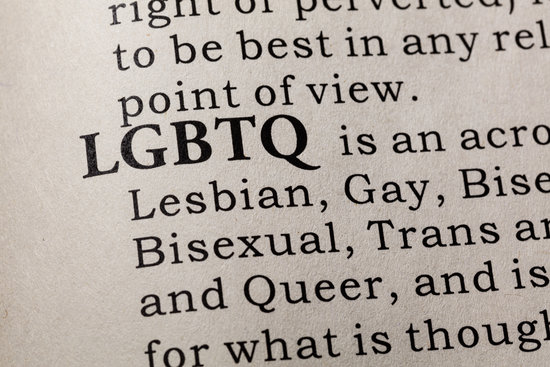
LGBTQ Definition: Beyond the Binary with LGBTQIA2+

LGBTQ Definition: Beyond the Binary

By Nicole Scrivano, LMFT – Director at Life Coaching and Therapy


Read our latest blog post: “LGBTQ Definition: Beyond the Binary” to help you understand the LGBTQ+ community and the definitions within them.

There are many identities and labels for people that have become more commonplace. 

LGBTQ Definition: Beyond the Binary

Often in sessions, clients and their families frequently comment on all the identities “nowadays.” 

Despite the alphabet soup that has become the LGBTQIA2+ community identities, most of these identities have actually been around to varying degrees.

The most salient and well known identities are lesbian, gay, bisexual, and more recently transgender. Then, adding to LGBTQIA2+ we have intersex, asexual, two-spirit, etc. 

However, the spectrum of sexuality identities and gender identities has always been present, it is just now that we have a more common language to communicate identities effectively. 


The Alphabet Soup – How Do I Use These Terms? 

An entire blog can be written on individual identities, and there are plenty of resources to help you familiarize yourself with varying identities and definitions. 

Here are LGBTQIA2+ definitions and resources that I would suggest you read to learn more:

True Colors (local LGBTQIA2+ non-profit): www.ourtruecolors.org

Definitions From LGBTQIA2+ National Help Center: http://www.glnh.org – glossary 

  • CISGENDER – Abbreviated as “Cis” s a Latin prefix which means “to remain on the same side of,” the antonym of the Latin prefix “Trans.” Someone whose gender identity conforms to the sex assigned to them at birth.
  • GENDERFLUID – An individual who is highly flexible about their gender expression and presentation.  They may fluctuate between presentations and identities, or combine them.
  • GENDERQUEER – Someone who identifies outside the normative gender binary.  This term is used as both an umbrella term and as an identity in itself. There is often a connotation of transgressiveness for those who identify with this label. 
  • GENDER NEUTRAL – ​Not specifying any particular gender.  Definition can vary depending on context and individual using the term.
  • INTERNALIZED HOMOPHOBIA- ​The experience of shame, aversion, or self-hatred in relation to one’s own attractions to a person of the same sex.
  • PANGENDER – A nonbinary identity.  Someone who identifies as pangender may identify with two or more genders, with any/all genders, or as a separate, third gender.
  • QUEER – A catch-all umbrella term for gender and sexuality minorities who are either not cis, not straight, or both.  The word queer is a reclaimed slur, and sometimes still used as such, so use it with sensitivity – do not use it for others unless they already have for themselves.
  • SEXUAL ORIENTATION – Defined by whom you are attracted to, emotionally, sexually, and/or romantically.  Has nothing to do with gender.
  • TRANSGENDER – Abbreviated as  “trans”. People whose gender identity differs from the sex assigned to them at birth. 

Once you have learned the LGBTQIA2+ terms it is important to do your best to use them appropriately. This means not as insults or not saying “a gay” or “a queer.” 

identities

Using person first language like someone “is gay” rather than “a gay,” allows the person to be seen as a human first not just their identity. A general rule of thumb is not to start with “a” or end with “s” (ex. Gays, queers, a gay, a queer, etc.). 

In regards to gender, the term transgendered is not accurate. Please utilize trans, transgender, trans. “Tranny” and words like this are harmful and problematic. DO NOT USE THEM

There are many terms that are offensive around gender, so please, please, please be mindful of the language you are using. 

Google exists for a reason! 

We suggest finding appropriate terms and language for each of these identities.


The Identity Evolution 

Sexuality and gender have both been shown to be on more of a spectrum and fluid rather than within dichotomies and stagnant. 

Although people often maintain their attraction towards a specific sex/gender/identity, that does not mean that it can’t change over time. 

For example, someone may identify as a lesbian earlier in their life, and then through self-exploration or a variety of sexual experiences, may identify as pansexual later on. 

Often a mistake I see is that people struggle to evolve with the individual as their identity evolves. 

Think of sexuality and gender as a continuum or a spectrum of colors. Break beyond the mold of choosing one or the other, and see it as evolving and dynamic. 

The queer (LGBTQIA2+) community is ever changing and evolving like most other communities. 

As the queer community has become more widely accepted, identities have become acknowledged or are more common place with the community (heteronormative) as a whole. 

People around the individual coming out or figuring out their identity would benefit from standing back and allowing that individual to explore themselves and to validate the evolution of that individual’s identity. 

Some people may remain consistent in their identities, other identities may ebb and flow for people, and that is okay. It is even normal.

When we try to stick those individuals into boxes, we begin to limit people’s ability to express who they really are. 

It is vital that we as a community (family, friends, providers, and partners alike) work towards learning and supporting people’s identities. 


Do Labels Really Matter? 

In one word, YES!

identities

Misgendering or dismissing one’s identity has a lasting impact. 

As the great Dr. Maya Angelou said, “I’ve learned that people will forget what you said, people will forget what you did, but people will never forget how you made them feel.” 

As we dismiss and misgender or misidentify people we are creating a feeling – a harmful one – that breaks their boundaries. 

We as a community need to work together to lean in and examine our biases to address our impact. Good intentions are not enough. 

The impact needs to meet those intentions as well, otherwise, intentional or not, we are causing harm. 

At the end of the day, does it really matter if you have to “label” someone different or identify a different pronoun for them? It really doesn’t. 

Although it may be challenging for you, isn’t it better to adjust than for someone to spend another moment hiding themselves or stifling their growth? 

I have had clients who have found ways to easily and effectively communicate shifts in their gender expression. 

Whether it is a certain accessory in their clothing, how they wear their hair, or verbal cues they give, there are many ways that this can be communicated to partners, parents, teachers, and/or community members. 

To some people, the specific term used may not matter to them. But to others, it matters immensely. 

If you do not know what to term to use – ASK THE PERSON.

When we ask and collaborate with one another we learn, we grow, and we all evolve. 

Will you learn, grow, and evolve with me?


About Life Coaching and Therapy

Life Coaching and Therapy (LCAT) is a therapy and coaching practice that transforms our clients lives through our flexible. Multi-technique approach and pleasure-skills training provided by systematically-trained and licensed therapists!

Get to know our founder and owner, Amanda Pasciucco, (a.k.a. The Sex Healer) PhD, Licensed Marriage and Family Therapist (LMFT), and an AASECT Certified Sex Therapist (CST) that has developed innovative therapy programs and therapy videos that get results.

Our team of compassionate, licensed therapists and certified sex therapists help all clients who visit us for a variety of personal, relationship, intimacy and sex problems.

LCAT provides on-site appointments, as well as video chat and text therapy programs.

Learn more about how LCAT can help improve your life at What We Do.