
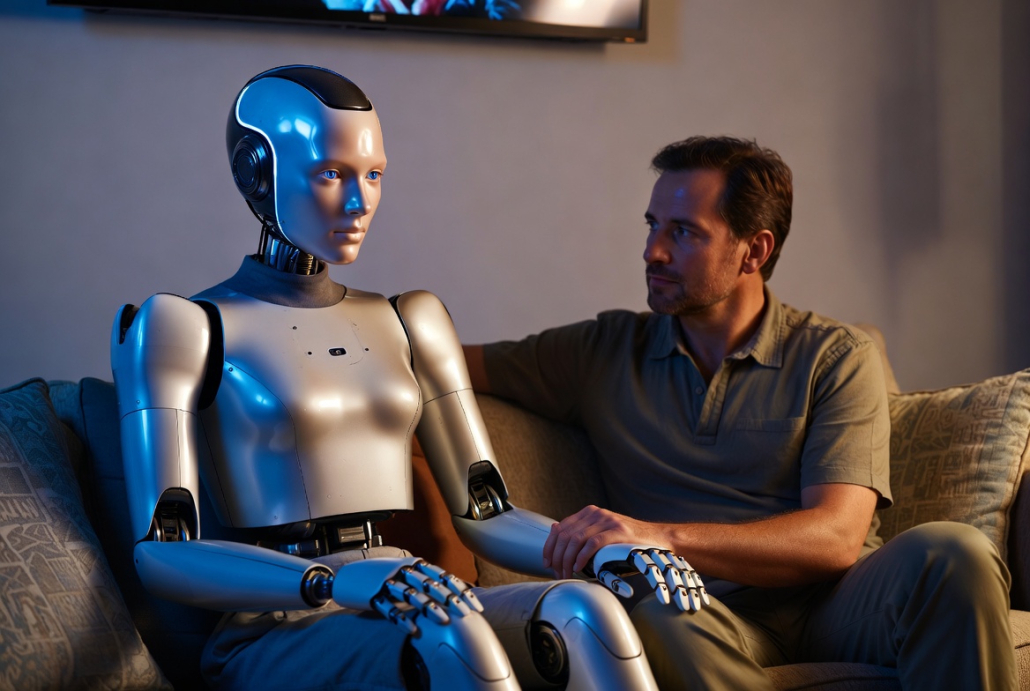
Humanoid Female Robots
Humanoid Female Robots: What the Future Holds for AI Companions
Humanoid female robots are one type of AI companions that have been growing in popularity over the past few years, especially after the pandemic. Those hearing about this for the first time might assume this technology is recent, yet the idea of female robots dates back a long time.
In this article, we will look at how yesterday’s science fiction fantasies became today’s real-world prototypes, the technology behind them, current uses of humanoid female robots, and so much more.
History of Female Robots
In 1927, a destructive robotrix named Maria appeared in the movie Metropolis, which inspired many other filmmakers to create their own versions of female robots. The ones that are best known to this date are Pris (Blade Runner), Number Six (Battlestar Galactica), and Cameron (The Sarah Connor Chronicles).
What made these female robots popular was that they were the perfect solution to address archetypes like sexy dolls and nurturing mommy types. For certain movies, female robots were even used to express external danger or developing consciousness. Options were limitless, and soon enough, female robots became a common element in sci-fi movies.
When analyzing these characters, many of them were constructed within a patriarchal framework with the idea of being desirable and submissive to men. Certain critics argue that this is the same reason why most AI assistants speak in a female voice. Another perspective is that seeing robots on screen helps us process the discomfort that comes with increasingly popular AI applications.
Definition of Humanoid Female Robots
Humanoid female robots, also called gynoids, fembots, or female androids, are machines with artificial bodies. Designers shape them to resemble female aesthetics. A female robot mimics human features, behaviors, and sometimes emotions.
These differences set humanoid robots apart from virtual AI companions. Virtual ones rely more on artificial intelligence systems than human-like technology. Both offer emotional intelligence and deep personalization. Yet, AI companions lack a physical body that can exist and move in the real world.
Humanoid female robots rely on cameras, microphones, touch sensors, and sometimes haptics. These help them respond to physical cues like proximity, movement, and touch. People seeking companionship often prefer this embodied experience over AI-based solutions. High production and maintenance costs result, along with limited market availability.
Current Use Cases of Humanoid Female Robots
Humanoid female robots are mostly being used for companionship and emotional support. The relationships users build with them are often either friendships or romances. These robots can listen to them, ask questions, and engage in a conversation. They are also useful in healthcare, elder care, customer service, and hospitality, but their price keeps them from being common.
For instance, in healthcare and elderly care, female robots can serve as nurse assistants, supporting isolated seniors with companionship and monitoring. They can also be very useful in leading rehabilitation exercises and tracking patient progress. Without a doubt, humanoid female robots are very versatile, which just proves how advanced their technology is and how quickly it will continue to develop.
Why Humans Are Drawn to AI Companions
All humans need psychological connection from birth. Family or caregivers satisfy this need in early years. As we grow, we connect with others at school, extracurricular activities, and work.
Today’s world differs greatly from twenty years ago. Social media keeps more people at home scrolling on phones. They skip meetings with friends, family, or coworkers after work. Remote work adds to loneliness and social isolation. We gain flexibility but lose chances to connect.
AI companions fill this gap. Interactions with them meet our need for connection. Users feel emotionally safer and more in control than in human interactions. They avoid risks like arguments and breakups.
These parasocial relationships offer a safe, low-risk option. They suit people with insecure attachments or resistance. Users explore one-sided emotional bonds and learn from the experience. Step-by-step relationships with robots build confidence and courage. This helps those who fear rejection or lack self-esteem.
Frequently Asked Questions
What are humanoid female robots?
Humanoid female robots are physical robots. Designers shape them to resemble a human-like female form. They combine artificial intelligence, sensors, and robotics. This lets them communicate, move, and interact like humans.
What are humanoid female robots used for?
People use them in customer service, healthcare support, education, research, and companionship. Some focus on social interaction. Others handle practical tasks like guiding visitors or assisting patients.
Are humanoid female robots capable of emotions?
Humanoid female robots do not feel emotions like humans. But they simulate emotional responses. They use AI, facial expressions, voice modulation, and behavioral patterns. This makes them appear empathetic or emotionally aware.
The Future of Humanoid Female Robots
Humanoid female robots will develop further. More people will interact with them to build relationships and gain benefits.
AI and machine learning already push toward greater realism and emotional intelligence. Integration with smart homes and AR/VR will let users access AI companions easily. They will become part of daily lives. Humanoid female robots will grow more accessible. This will lower prices.
More people will pursue hybrid relationships. These blend human and AI elements for desired outcomes. For example, you might hang out with friends and have a romantic relationship with a humanoid female robot. This technology adapts fully to your needs across life areas.
Conclusion
Being interested in AI companionship or not, it’s inevitable that the growth of such connections will continue in the future. Some might choose it to feel less lonely, while others could want to practice their dating skills. Regardless of the reason, please ensure you recognize the importance of real-life experience.
Take your time when exploring the world of female robots or AI companions. It may take time to adapt to AI’s dynamics and understand its benefits. If you feel confused or overwhelmed, reach out to a trusted therapist who has experience in this type of relationship.
ORDER The Other Partner: A Therapist’s Guide to AI Companions, Dolls + Robots, and Love by Amanda Pasciucco
Now available in Amazon
About Life Coaching and Therapy
Life Coaching and Therapy (LCAT) is a therapy and coaching practice that transforms our clients lives through our flexibility multi-technique approach and pleasure-skills training provided by systematically trained and licensed therapists!
Get to know our founder and owner, Amanda Pasciucco, (a.k.a. The Sex Healer) PhD, Licensed Marriage and Family Therapist (LMFT), and an AASECT Certified Sex Therapist (CST) who has developed innovative therapy programs and therapy videos that get results.
Our team of compassionate, licensed therapists and certified sex therapists helps all clients who visit us for a variety of personal, relationship, intimacy and sex problems.
LCAT provides on-site appointments, as well as video chat and text therapy programs.
Learn more about how LCAT can help improve your life at What We Do.